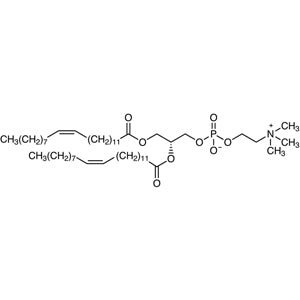
1,2-Dierucoyl-sn-glycero-3-phosphocholine is a chemical compound used in pharmaceutical research and drug delivery system development. It belongs to the class of phospholipids and is widely utilized in laboratories for its ability to facilitate the binding of drug molecules to cell membranes. This compound plays a crucial role in the study of how drugs interact with target cells, contributing to the design of more effective and targeted drug delivery mechanisms. Its presence in research settings supports the advancement of innovative therapeutic approaches by enabling the controlled release of active pharmaceutical ingredients.
The compound is preferred due to its chemical stability under specific conditions, which simplifies storage and handling in a laboratory environment. Its complex molecular structure allows for chemical modifications, making it versatile for various pharmaceutical applications such as liposome and nanoparticle formulations. This adaptability enhances its utility in drug development, where flexibility in molecular design is essential. Additionally, its compatibility with different research methodologies ensures it remains a valuable tool for scientists working on drug delivery systems.
In Indonesian laboratories, this compound is commonly used by researchers in pharmacology and pharmaceutical chemistry. It supports studies aimed at improving drug efficacy and targeting, aligning with the country's growing focus on advanced drug development. Its application in both academic and industrial research settings underscores its importance in the field of pharmaceutical innovation.
- Drug Delivery System Research - This compound is ideal for studying how drugs interact with cell membranes, enabling the development of more targeted and efficient delivery mechanisms.
- Liposome Formulation Development - Its phospholipid structure makes it suitable for creating liposomes, which are used to encapsulate and deliver drugs more effectively.
- Nanoparticle Synthesis - The compound's molecular flexibility allows for the creation of nanoparticles that can be tailored for specific therapeutic applications.
- Pharmacological Interaction Studies - It supports research into how drugs interact with biological systems, aiding in the optimization of therapeutic outcomes.
- Targeted Drug Release Studies - Its ability to bind to cell membranes helps in the design of systems that release drugs at specific sites within the body.
| Brand | TCI |
|---|---|
| CAS number | 51779-95-4 |
| Molecular formula | — |
| Purity | — |
| Category | Chemistry > Pharmaceutical Development and Drug Discovery Research Reagents > Drug Delivery Systems (DDS) |
| Pack sizes | Available in various quantities as per supplier specifications |
| Physical form | Powder or liquid, depending on formulation |
| Storage | Store in a cool, dry place away from direct sunlight |
This compound should be stored in a cool, dry environment to maintain its chemical stability. It is recommended to use airtight containers to prevent exposure to moisture and contaminants. In laboratory settings, it should be handled with appropriate personal protective equipment, such as gloves and safety goggles, to ensure safety during preparation and use. The compound is generally stable under normal laboratory conditions but should be kept away from heat sources and incompatible substances. Proper labeling of containers is essential to prevent misidentification and ensure safe handling. Regular inspection of storage conditions is advised to maintain the integrity of the material throughout its use in research applications.
—
Produk Terkait
-
1,2-Dioleoyl-sn-glycero-3-phosphocholine TCI D4250
Regular price From Rp 2.332.050,00Regular price -
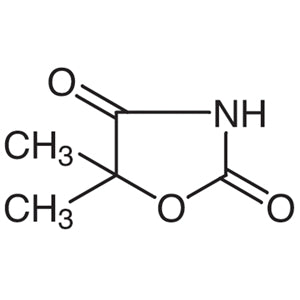
5,5-Dimethyl-2,4-oxazolidinedione TCI D0003
Regular price From Rp 1.510.950,00Regular price -
2,6-Dibromoaniline TCI D0004
Regular price From Rp 2.306.850,00Regular price -
trans-Decahydronaphthalene TCI D0007
Regular price From Rp 928.200,00Regular price -
Decahydronaphthalene(cis-andtrans-mixture) TCI D0008
Regular price From Rp 452.550,00Regular price -
cis-Decahydronaphthalene TCI D0009
Regular price From Rp 1.353.450,00Regular price -
Decane TCI D0011
Regular price From Rp 477.750,00Regular price -
DodecanedioicAcid TCI D0013
Regular price From Rp 584.850,00Regular price