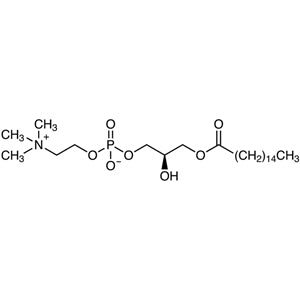
1-Palmitoyl-sn-glycero-3-phosphocholine (PPC), also known as TCI P2694, is a chemical compound widely used in pharmaceutical research and drug delivery system development. This reagent plays a crucial role in laboratories by enabling the study of how drugs interact with cellular membranes. Its structure closely resembles natural phospholipids found in cell membranes, making it an essential tool for understanding drug targeting and membrane interactions. PPC is particularly valuable in the formulation of liposomes, which are lipid-based carriers that enhance the delivery of therapeutic agents to specific sites in the body.
PPC is preferred due to its unique chemical properties, including a balanced hydrophilic-hydrophobic nature and the ability to form stable lipid structures. These characteristics allow it to be used in the development of targeted drug delivery systems with improved efficiency and specificity. Its chemical stability under certain conditions ensures consistent performance in repeated experiments, making it a reliable choice for researchers. Additionally, PPC's compatibility with various experimental setups supports its use in a wide range of pharmacological studies.
In Indonesian laboratories, PPC is commonly used in research focused on drug delivery systems and pharmaceutical development. It is a key reagent in the formulation of liposomal drug carriers, which are essential for improving the bioavailability and therapeutic efficacy of drugs. Its application is also seen in studies related to membrane interactions and drug targeting, supporting both academic and industrial research efforts in the pharmaceutical sector.
- Drug Delivery System Development: PPC is ideal for creating liposomal formulations that enhance drug solubility and cellular uptake, improving therapeutic outcomes.
- Pharmaceutical Research: Its structural similarity to natural phospholipids makes it suitable for studying drug-membrane interactions and cellular targeting mechanisms.
- Liposome Formulation: PPC is widely used in the preparation of liposomes, which serve as efficient carriers for delivering drugs to specific tissues or cells.
- Membrane Interaction Studies: PPC supports research into how drugs interact with cell membranes, aiding in the design of more effective drug delivery strategies.
- Pharmacological Applications: It is a key component in experiments that explore the behavior of drugs within biological systems, contributing to the development of new therapeutic approaches.
| Brand | TCI |
|---|---|
| CAS number | 17364-16-8 |
| Molecular formula | — |
| Purity | — |
| Category | Chemistry > Pharmaceutical Development and Drug Discovery Research Reagents > Drug Delivery Systems (DDS) |
| Pack sizes | Available in various quantities as per supplier specifications |
| Physical form | Powder or liquid, depending on the formulation |
| Storage | Store in a cool, dry place away from light and moisture |
PPC should be stored in a cool, dry environment, away from direct sunlight and moisture to maintain its chemical stability. It is recommended to use airtight containers to prevent exposure to humidity and contaminants. In laboratory settings, proper personal protective equipment such as gloves and safety goggles should be worn when handling PPC to ensure safety. The compound should be kept in a well-ventilated area to minimize inhalation risks. Regular monitoring of storage conditions is advised to ensure the material remains in optimal condition for research use. Proper labeling of containers is also essential to prevent cross-contamination and ensure safe handling.
—
Produk Terkait
-
1-Palmitoyl-2-oleyl-sn-glycero-3-phospho-rac-(1-glycerol)SodiumSalt TCI P2522
Regular price Rp 6.784.050,00Regular price -
1,2-Dierucoyl-sn-glycero-3-phosphocholine TCI D5319
Regular price Rp 4.743.900,00Regular price -
1,2-Dioleoyl-sn-glycero-3-phosphocholine TCI D4250
Regular price From Rp 2.332.050,00Regular price -
1,2-Distearoyl-sn-glycero-3-phosphocholine TCI D3926
Regular price From Rp 2.704.800,00Regular price -
1,2-Dipalmitoyl-sn-glycero-3-phosphocholine TCI D3925
Regular price From Rp 2.199.750,00Regular price -
1,2-Dimyristoyl-sn-glycero-3-phosphocholine TCI D3924
Regular price From Rp 2.650.200,00Regular price -
1,2-Dioleoyl-sn-glycero-3-phospho-rac-(1-glycerol)SodiumSalt TCI D5318
Regular price Rp 5.300.400,00Regular price -
1,2-Dimyristoyl-sn-glycero-3-phospho-rac-(1-glycerol)SodiumSalt TCI D3946
Regular price Rp 8.956.500,00Regular price