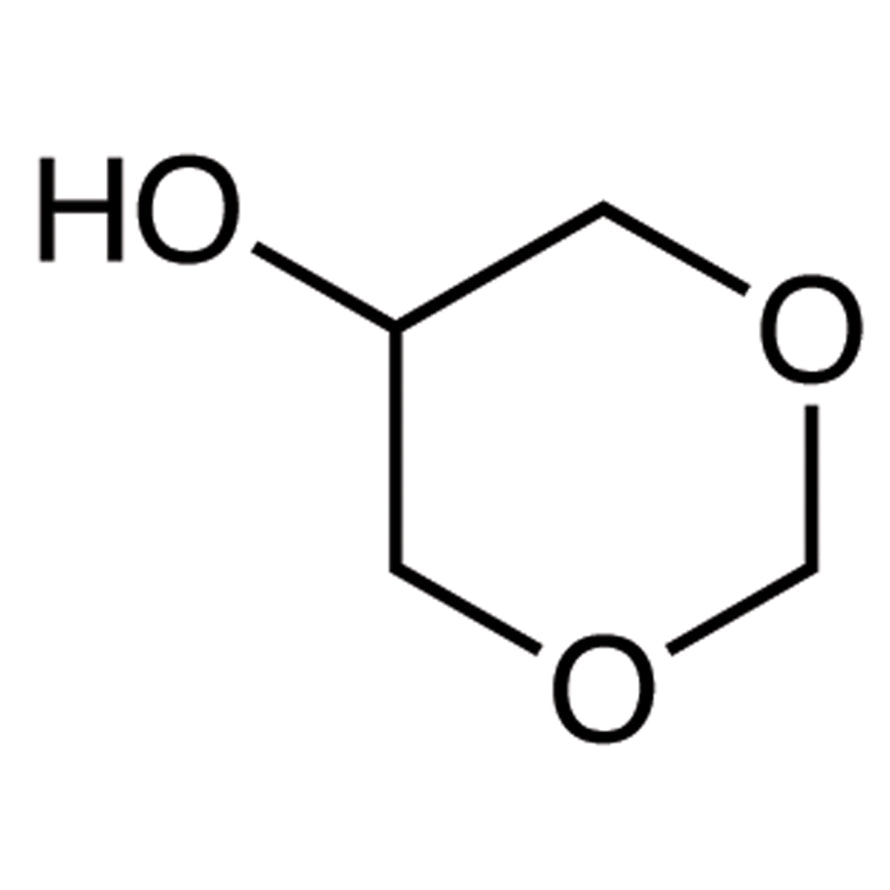
Glycerol Formal, with the chemical name 1,3-Dioxan-5-ol and CAS number 4740-78-7, is an organic compound widely used in various chemical reactions within laboratory settings. It is a versatile building block in synthetic chemistry, particularly in the development of complex molecules. Its molecular structure consists of a dioxane ring with a hydroxyl group at the fifth position, making it a valuable intermediate in organic synthesis. This compound is often employed in reactions that require the formation of carbon-carbon bonds or substitution reactions.
One of the key properties that make Glycerol Formal a preferred choice is its polarity and solubility in organic solvents such as ethyl acetate and ethanol. These characteristics allow it to participate effectively in nucleophilic reactions, where it can act as an electron donor. Its ability to form hydrogen bonds and its compatibility with a wide range of reagents make it a reliable component in synthetic protocols. Additionally, its stability under normal conditions ensures consistent performance and ease of handling in laboratory environments.
In Indonesian laboratories, Glycerol Formal is commonly used in organic chemistry research, especially in projects focused on the synthesis of new compounds or molecular modifications. Its availability and well-documented chemical behavior make it a staple in academic and industrial research settings. Researchers in Indonesia frequently rely on this compound for its predictable reactivity and compatibility with various synthetic methods.
Related TCI products
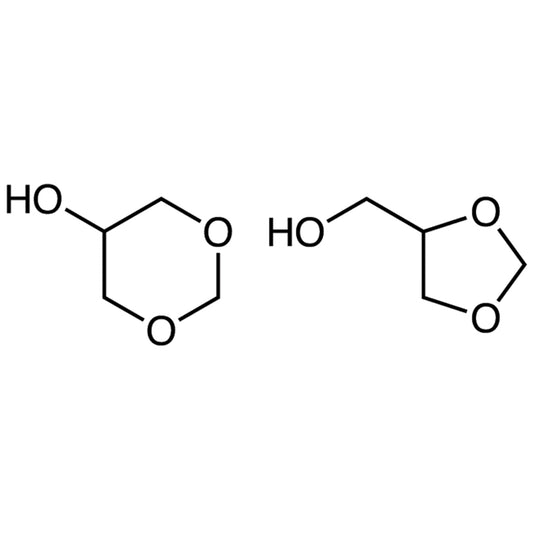
- TCI G0244 99569-11-6 Glycerol Formal (mixture of 1,3-Dioxan-5-ol and 4-Hydroxymethyldioxolane)
- TCI B3905 847682-00-2 1,3-Bis[(2,2-dimethyl-1,3-dioxan-5-yl)oxy]-2-propanol
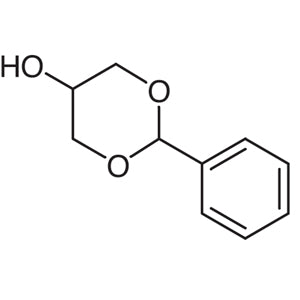
- TCI P1422 1708-40-3 2-Phenyl-1,3-dioxan-5-ol
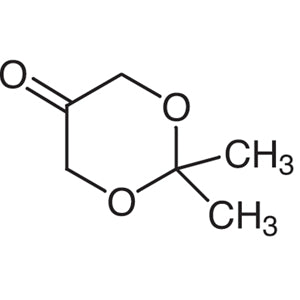
- TCI D2397 74181-34-3 2,2-Dimethyl-1,3-dioxan-5-one
- TCI G0159 93-14-1 Guaiacol Glycerol Ether
- TCI A2474 1392500-07-0 2-Azido-1,3-bis[(2,2-dimethyl-1,3-dioxan-5-yl)oxy]propane
- Organic synthesis as a building block for creating complex molecules due to its reactivity and structural versatility.
- Nucleophilic substitution reactions where its electron-donating properties enhance reaction efficiency and yield.
- Solvent-compatible reactions in polar environments, enabling effective interaction with other reagents and substrates.
- Molecular modification studies for developing new compounds with specific functional groups and properties.
- Research in polymer chemistry for its potential in forming cross-linked structures and functional polymers.
| Brand | TCI |
|---|---|
| CAS number | 4740-78-7 |
| Molecular formula | — |
| Purity | — |
| Category | Chemistry > Building Blocks > Non-Heterocyclic Building Blocks |
| Pack sizes | Available in various quantities as per standard laboratory supply options |
| Physical form | Liquid |
| Storage | Store in a cool, dry place away from direct sunlight and incompatible materials |
Glycerol Formal should be stored in a cool, dry location, away from direct sunlight and sources of heat. It is recommended to keep it in a sealed container made of glass or high-density polyethylene to prevent contamination and evaporation. Due to its polar nature, it should be handled with care to avoid exposure to incompatible substances such as strong oxidizing agents. In laboratory settings, it is important to ensure proper ventilation and use of personal protective equipment when handling this compound. Regular inspection of storage containers is advised to maintain the integrity and safety of the material.
—
Produk Terkait
-
GlycerolFormal(mixtureof1,3-Dioxan-5-oland4-Hydroxymethyldioxolane) TCI G0244
Regular price From Rp 875.700,00Regular price -
1,3-Bis[(2,2-dimethyl-1,3-dioxan-5-yl)oxy]-2-propanol TCI B3905
Regular price Rp 3.340.050,00Regular price -
2-Phenyl-1,3-dioxan-5-ol TCI P1422
Regular price Rp 3.155.250,00Regular price -
2,2-Dimethyl-1,3-dioxan-5-one TCI D2397
Regular price From Rp 2.650.200,00Regular price -
GuaiacolGlycerolEther TCI G0159
Regular price From Rp 505.050,00Regular price -
2-Azido-1,3-bis[(2,2-dimethyl-1,3-dioxan-5-yl)oxy]propane TCI A2474
Regular price Rp 4.743.900,00Regular price -
GlycerolTriacrylate(stabilizedwithMEHQ) TCI G0591
Regular price Rp 2.889.600,00Regular price -
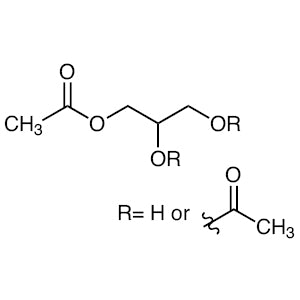
Diacetin(containsMono-,Tri-,Glycerol) TCI G0077
Regular price From Rp 505.050,00Regular price

![847682-00-2 1,3-Bis[(2,2-dimethyl-1,3-dioxan-5-yl)oxy]-2-propanol - AMI Scientific](http://amiscientific.com/cdn/shop/files/TCI2510B3905.jpg?v=1768815545&width=533)

![1392500-07-0 2-Azido-1,3-bis[(2,2-dimethyl-1,3-dioxan-5-yl)oxy]propane - AMI Scientific](http://amiscientific.com/cdn/shop/files/TCI2510A2474.jpg?v=1767082932&width=533)