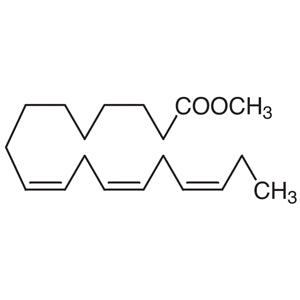
Methyl Linolenate (301-00-8) is a chemical compound widely used in laboratory settings for its versatility in organic synthesis and chemical experimentation. As a key building block in the field of chemistry, it plays a crucial role in the development of more complex molecular structures. Its unique molecular structure allows it to participate in various chemical reactions, making it an essential component for researchers working in synthetic chemistry. This compound is particularly valuable in laboratories where the creation of new compounds and the study of molecular behavior are central to the research objectives.
The chemical properties of Methyl Linolenate make it a preferred choice for laboratory use. It exhibits a stable chemical profile under controlled conditions, yet remains highly reactive when exposed to specific environmental factors such as elevated temperatures or the presence of catalysts. Its long carbon chain structure and relatively low melting point contribute to its ease of processing and handling, which is advantageous in experimental procedures. These characteristics ensure that it remains a reliable and effective material for a wide range of chemical applications.
In Indonesian laboratories, Methyl Linolenate is commonly used in organic chemistry research, especially in the study of lipids and terpenoids. Its reactivity and structural flexibility make it a valuable tool for synthesizing complex compounds and understanding molecular interactions. Researchers in Indonesia rely on this compound for its consistent performance and adaptability in various experimental contexts, supporting advancements in chemical research and development.
- Organic synthesis experiments benefit from Methyl Linolenate due to its reactivity and ability to form complex molecular structures.
- Lipid research utilizes this compound for studying the behavior of long-chain fatty acid derivatives in biochemical processes.
- Terpenoid synthesis relies on Methyl Linolenate as a precursor for creating diverse organic compounds with biological significance.
- Chemical reaction testing employs this material to evaluate the effects of different catalysts and reaction conditions.
- Analytical chemistry applications use Methyl Linolenate as a standard for calibrating instruments and validating experimental results.
| Brand | TCI |
|---|---|
| CAS number | 301-00-8 |
| Molecular formula | — |
| Purity | — |
| Category | Chemistry > Building Blocks > Non-Heterocyclic Building Blocks |
| Pack sizes | Available in various quantities as per standard laboratory requirements |
| Physical form | Liquid or solid, depending on the specific product variant |
| Storage | Store in a cool, dry place away from direct sunlight and incompatible materials |
Methyl Linolenate should be stored in a cool, dry environment to maintain its chemical stability and prevent degradation. It is recommended to use sealed containers made of materials that are chemically inert to avoid any unwanted reactions. Proper ventilation is essential when handling this compound to minimize exposure to vapors. Laboratory personnel should wear appropriate personal protective equipment, such as gloves and safety goggles, to ensure safe handling. The compound should be kept away from heat sources and incompatible substances to prevent accidental reactions. Regular monitoring of storage conditions is advised to ensure the integrity of the material remains intact throughout its shelf life.
—
Produk Terkait
-
TCI B5774 5,10-Bis(4,4,5,5-tetramethyl-1,3,2-dioxaborolan-2-yl)naphtho[1,2-c:5,6-c']bis([1,2,5]oxadiazole)
Regular price Rp 10.255.350,00Regular price -
Dihydroiodide TCI B6569
Regular price From Rp 1.936.200,00Regular price -
Trifluoromethanesulfonate TCI B7003
Regular price From Rp 1.936.200,00Regular price
![5,10-Bis(4,4,5,5-tetramethyl-1,3,2-dioxaborolan-2-yl)naphtho[1,2-c:5,6-c']bis([1,2,5]oxadiazole) - TCI B5774 - AMI Scientific](http://amiscientific.com/cdn/shop/files/TCI2510B5774.jpg?v=1769180228&width=533)