TCI M1060 1-(2-Methoxyphenoxy)-2-propanol is an aromatic ether compound that joins a guaiacol ring, a methoxy-substituted phenol, to a propanol chain through an ether linkage. This structure positions the compound as a non-heterocyclic building block carrying one free secondary hydroxyl group and two ether groups. In the laboratory it is used as a synthetic intermediate, as a specialty solvent in certain experiments, and as a model compound in lignin chemistry research. The combination of a guaiacyl framework and an aryl-alkyl ether bond makes it a simple representation of a structural motif widely found in natural polymers.
The characteristics that make it a preferred choice begin with the availability of a secondary hydroxyl group that is reactive yet not excessively hindered, leaving it ready to be esterified, etherified, oxidised to the corresponding ketone, or converted into a leaving group for nucleophilic substitution. Its aryl-alkyl ether bond is relatively stable under neutral and basic conditions but can be cleaved under specific conditions, a property that sits at the very centre of attention in lignin depolymerisation research. The methoxy group on the ring raises the aromatic electron density and influences the substitution pattern of the ring.
In Indonesian laboratories this material is typically handled in university research groups, government research institutes, and industrial development units working on organic synthesis and biomass chemistry. It is drawn from the store cupboard for small-scale reaction work, for preparing reference materials, and for studies that need a well-defined model of an aryl-alkyl ether linkage. Because it is a catalogue building block rather than a bulk commodity, it is usually ordered in laboratory pack sizes and consumed across a series of experiments.
Related TCI products
- TCI M1062 42900-54-9 1-(4-Methoxyphenoxy)-2-propanol
- TCI B5207 23116-94-1 1,5-Bis(2-hydroxyphenoxy)-3-oxapentane
- TCI B1485 5085-95-0 1,4-Bis(3-hydroxyphenoxy)benzene
- TCI B1484 126716-90-3 1,3-Bis(4-hydroxyphenoxy)benzene
- TCI B1479 104104-12-3 Bis[2-(4-methoxyphenoxy)ethyl] Ether
- TCI B1454 13118-91-7 1,3-Bis(4-methoxyphenoxy)benzene
- Synthetic intermediate preparation: the free secondary hydroxyl group can be esterified, etherified, or oxidised, giving chemists a convenient handle for building larger target molecules step by step.
- Lignin model compound studies: its guaiacyl ring and aryl-alkyl ether bond reproduce a structural motif of natural polymers, making it a simple stand-in for lignin fragments in research.
- Ether cleavage and depolymerisation research: the aryl-alkyl ether bond resists neutral and basic conditions yet can be broken under specific conditions, exactly the behaviour such studies aim to examine.
- Specialty solvent use in selected experiments: the compound combines aromatic character with hydroxyl and ether functionality, suiting particular reaction media where common solvents are unsuitable.
- Nucleophilic substitution chemistry: the secondary alcohol can be converted into a leaving group, allowing the propanol chain to be functionalised while the guaiacyl ether framework remains intact.
| Brand | TCI (Tokyo Chemical Industry) |
|---|---|
| CAS number | 64120-49-6 |
| Molecular formula | — |
| Purity | — |
| Category | Chemistry > Building Blocks > Non-Heterocyclic Building Blocks |
| Pack sizes | supplied in standard TCI laboratory pack sizes; please confirm the available size when ordering |
| Physical form | — |
| Storage | keep in a tightly closed original container in a cool, dry, well-ventilated place |
- Product code: M1060
Store the container tightly closed in a cool, dry and well-ventilated area, away from direct sunlight, heat sources, and strong oxidising agents. Keep the material in its original supplier container or in a compatible, clearly labelled chemical-resistant bottle, and reseal it promptly after each use to limit exposure to moisture and air. Handle in a fume hood using safety glasses, chemical-resistant gloves, and a laboratory coat. Avoid contact with skin and eyes and avoid breathing vapours. Consult the manufacturer's safety data sheet before use and dispose of residues according to applicable laboratory waste procedures.
—
Produk Terkait
-
1-(4-Methoxyphenoxy)-2-propanol TCI M1062
Regular price Rp 2.094.750,00Regular price -
1,5-Bis(2-hydroxyphenoxy)-3-oxapentane TCI B5207
Regular price Rp 1.618.050,00Regular price -
1,4-Bis(3-hydroxyphenoxy)benzene TCI B1485
Regular price Rp 3.578.400,00Regular price -
1,3-Bis(4-hydroxyphenoxy)benzene TCI B1484
Regular price From Rp 2.174.550,00Regular price -
Bis[2-(4-methoxyphenoxy)ethyl]Ether TCI B1479
Regular price Rp 1.298.850,00Regular price -
1,3-Bis(4-methoxyphenoxy)benzene TCI B1454
Regular price Rp 3.446.100,00Regular price -
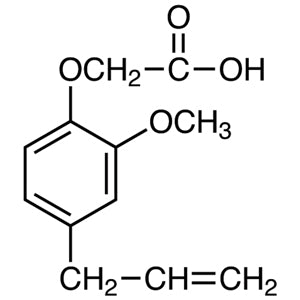
(4-Allyl-2-methoxyphenoxy)aceticAcid TCI A3037
Regular price From Rp 2.041.200,00Regular price -
2-(4-Methoxyphenoxy)propanoicAcid TCI M3883
Regular price From Rp 1.035.300,00Regular price


![104104-12-3 Bis[2-(4-methoxyphenoxy)ethyl] Ether - AMI Scientific](http://amiscientific.com/cdn/shop/files/TCI2510B1479.jpg?v=1769141601&width=533)