9-Mesityl-10-methylacridinium Perchlorate is a chemical compound widely used in catalytic reactions and organic synthesis within laboratory settings. It belongs to the class of organocatalysts, which are essential for promoting chemical reactions without altering the fundamental structure of the substrates involved. This compound is particularly valued for its ability to activate electron-deficient substrates, making it a versatile tool in synthetic chemistry. Its role in laboratory research is critical, especially in processes requiring controlled reactivity and selectivity.
The compound's unique molecular structure provides high reactivity, especially in substitution and electrophilic reactions. Its stability under various reaction conditions makes it a preferred choice for researchers looking for consistent performance. Additionally, its solubility in organic solvents simplifies its handling and application in diverse experimental setups. These properties contribute to its effectiveness in both academic and industrial research environments.
In Indonesian laboratories, 9-Mesityl-10-methylacridinium Perchlorate is commonly used in organic chemistry and catalysis research. It is a key component in studies focused on reaction mechanisms, catalyst design, and synthetic pathway optimization. Its reliability and efficiency make it a staple in both university research facilities and industrial laboratories across Indonesia.
TCI brochures (PDF)
- Highly Active Visible Light Photoredox Organocatalyst Acr-450 2026-08-07 · p. 1
- Highly Versatile and Atom-Efficient Trifluoromethylthiolating Agent TTST 2024-03-22 · p. 1
- Iridium Photoredox Catalyst with Highly Oxidizing Excited State 2023-07-21 · p. 2
- Visible Light Photoredox Catalysts 2026-04-28 · p. 2
- Organic Photoreaction Reagents 2025-02-13 · p. 4
- Oxidizing Agents 2025-06-11 · p. 9
Related TCI products
- TCI B2897 2743539-91-3 9-(2-Biphenylyl)-10-methylacridinium Perchlorate
- TCI M2072 1216909-33-9 9-Mesityl-2,7,10-trimethylacridinium Perchlorate
- TCI M1787 26456-05-3 10-Methylacridinium Perchlorate
- TCI M1775 36519-61-6 10-Methyl-9-phenylacridinium Perchlorate
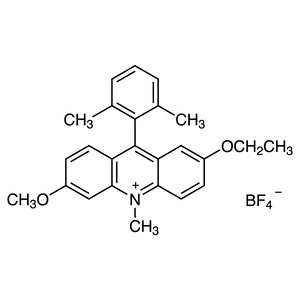
- TCI D5983 2771238-32-3 9-(2,6-Dimethylphenyl)-2-ethoxy-6-methoxy-10-methylacridinium Tetrafluoroborate
- TCI D6218 1810004-87-5 3,6-Di-tert-butyl-9-mesityl-10-phenylacridinium Tetrafluoroborate
- Organic synthesis reactions benefit from this compound’s ability to activate substrates, enhancing reaction efficiency and selectivity.
- Catalytic processes in industrial and academic settings utilize its stability and reactivity to improve yield and reduce by-product formation.
- Research on reaction mechanisms leverages its predictable behavior to study electronic and structural influences on chemical transformations.
- Development of new catalysts often incorporates this compound due to its effectiveness in promoting specific reaction pathways.
- Analytical applications in chemical characterization benefit from its consistent performance in controlled experimental conditions.
From the TCI brochure
- Catalyst (cat.) in radical trifluoromethylthiolation of alkene with T4211, under 425 nm LED, DMF, r.t.
| Brand | TCI |
|---|---|
| CAS number | 674783-97-2 |
| Molecular formula | — |
| Purity | — |
| Category | Chemistry > Catalysis and Inorganic Chemistry > Organocatalysts [Catalysis] |
| Pack sizes | Available in standard laboratory quantities as specified by supplier |
| Physical form | Solid powder or crystalline, depending on formulation |
| Storage | Store in a cool, dry place away from moisture and direct sunlight |
This compound should be stored in a cool, dry environment to maintain its stability and effectiveness. It is recommended to use airtight containers to prevent exposure to moisture and air, which could affect its performance. Due to its chemical nature, it should be handled with appropriate personal protective equipment, such as gloves and safety goggles, to ensure laboratory safety. Avoid direct contact with skin or inhalation of vapors. Keep it away from incompatible substances to prevent any potential chemical reactions. Proper storage ensures the compound remains viable for use in various research applications.
—
Product Categories
Produk Terkait
-
9-(2-Biphenylyl)-10-methylacridiniumPerchlorate TCI B2897
Regular price Rp 4.240.950,00Regular price -
9-Mesityl-2,7,10-trimethylacridiniumPerchlorate TCI M2072
Regular price Rp 9.063.600,00Regular price -
10-MethylacridiniumPerchlorate TCI M1787
Regular price From Rp 1.326.150,00Regular price -
10-Methyl-9-phenylacridiniumPerchlorate TCI M1775
Regular price From Rp 2.704.800,00Regular price -
9-(2,6-Dimethylphenyl)-2-ethoxy-6-methoxy-10-methylacridiniumTetrafluoroborate TCI D5983
Regular price From Rp 3.367.350,00Regular price -
3,6-Di-tert-butyl-9-mesityl-10-phenylacridiniumTetrafluoroborate TCI D6218
Regular price Rp 4.771.200,00Regular price -
Mesityl(phenyl)methanone TCI T4297
Regular price From Rp 955.500,00Regular price -
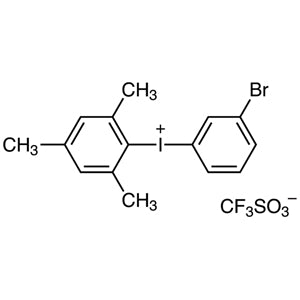
(3-Bromophenyl)(mesityl)iodoniumTrifluoromethanesulfonate TCI B5277
Regular price From Rp 3.287.550,00Regular price