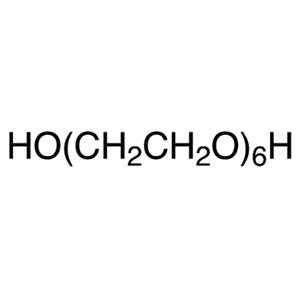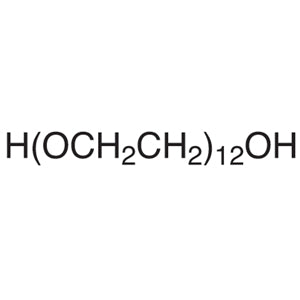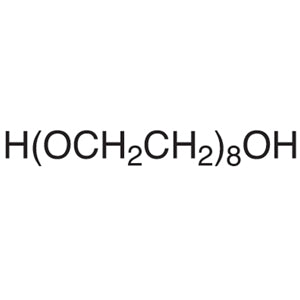
Octaethylene Glycol (OEG), also known as TCI O0295 with CAS number 5117-19-1, is a chemical compound widely used in scientific and industrial applications. As a member of the polyethylene glycol (PEG) family, OEG consists of eight ethylene glycol units connected by covalent bonds. It plays a crucial role in laboratory settings, particularly in chemical biology and PEGylation processes. This compound is essential for modifying biological molecules to enhance their stability and longevity, making it a key component in advanced research.
OEG is valued for its chemical stability, non-toxicity, and non-volatility, which make it safe for use in laboratory environments. Its ability to dissolve in organic solvents such as ethylamine and dimethyl sulfoxide further enhances its versatility. These properties ensure consistent performance in chemical reactions and synthesis processes, making it a preferred choice for researchers. The compound’s inert nature also minimizes unwanted side reactions, contributing to its reliability in various experimental setups.
In Indonesian laboratories, OEG is commonly used in biomedical research and chemical synthesis. It is a fundamental material for scientists working on drug development, molecular modification, and biocompatible material creation. Its availability through suppliers like AMI Scientific ensures that researchers have access to high-quality OEG for their experiments. The compound’s reliability and safety profile make it an essential tool in both academic and industrial research settings.
TCI brochures (PDF)
- Biomaterials Research Reagents 2025-02-19 · p. 20
- PEGylation of biomolecules is a key application where OEG is used to enhance the stability and half-life of therapeutic proteins and peptides.
- In chemical synthesis, OEG serves as a versatile solvent and reagent for the preparation of complex organic compounds.
- Biomedical research often utilizes OEG to develop drug delivery systems and improve the solubility of hydrophobic compounds.
- Polymer chemistry applications benefit from OEG’s ability to form stable polymeric structures, aiding in the creation of advanced materials.
- Analytical chemistry experiments use OEG as a standard reference material for calibration and as a component in chromatographic analysis.
| Brand | TCI |
|---|---|
| CAS number | 5117-19-1 |
| Molecular formula | — |
| Purity | — |
| Category | Chemistry > Chemical Biology > PEGylation |
| Pack sizes | Available in various sizes as per supplier specifications |
| Physical form | Colorless liquid |
| Storage | Store in a cool, dry place away from direct sunlight |
Octaethylene Glycol should be stored in a cool, dry environment to maintain its chemical stability and prevent degradation. It is recommended to use sealed containers made of glass or high-density polyethylene to avoid contamination and ensure long-term preservation. Due to its non-volatile nature, it does not require refrigeration but should be kept away from heat sources. In laboratory settings, it is important to handle OEG with appropriate personal protective equipment, such as gloves and safety goggles, to ensure safety during use. Proper labeling of containers is essential to prevent accidental exposure and ensure safe handling in a controlled environment.
—
Product Categories
Produk Terkait
-
OctaethyleneGlycolMonomethylEther TCI O0296
Regular price From Rp 5.300.400,00Regular priceRp 3.722.250,00Sale price From Rp 5.300.400,00 -
TriethyleneGlycol TCI T0428
Regular price Rp 530.250,00Regular priceRp 386.400,00Sale price Rp 530.250,00 -
TetraethyleneGlycol TCI T0099
Regular price From Rp 557.550,00Regular priceRp 405.300,00Sale price From Rp 557.550,00 -
PentaethyleneGlycol TCI P1154
Regular price From Rp 1.618.050,00Regular priceRp 1.146.600,00Sale price From Rp 1.618.050,00 -
NonaethyleneGlycol TCI N0698
Regular price Rp 11.791.500,00Regular priceRp 8.261.400,00Sale price Rp 11.791.500,00 -
HexaethyleneGlycol TCI H1432
Regular price From Rp 3.074.400,00Regular priceRp 2.165.100,00Sale price From Rp 3.074.400,00 -
HeptaethyleneGlycol TCI H1045
Regular price Rp 4.399.500,00Regular priceRp 3.092.250,00Sale price Rp 4.399.500,00 -
DodecaethyleneGlycol TCI D2901
Regular price Rp 6.067.950,00Regular priceRp 4.258.800,00Sale price Rp 6.067.950,00