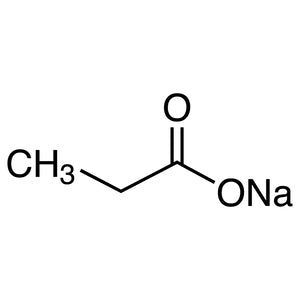
Calcium Propionate TCI P0503, with CAS number 4075-81-4, is a chemical compound widely used in laboratory settings for various chemical experiments. It is a salt derived from propionic acid and is commonly utilized in organic synthesis due to its chemical stability and solubility in water. This compound serves as a versatile building block in the field of chemistry, particularly in the development of new organic compounds. Its role in the laboratory is crucial for both research and industrial applications, where it is employed as a reagent or a stabilizing agent in chemical reactions.
The chemical properties of Calcium Propionate make it a preferred choice for laboratory use. It is non-toxic and safe to handle, which is essential in maintaining a secure working environment. Its high water solubility allows for easy mixing and incorporation into different chemical solutions, simplifying experimental procedures. Additionally, its chemical stability ensures that it remains unchanged under normal storage conditions, reducing the risk of degradation and contamination. These characteristics make it a reliable and efficient material for use in both academic and industrial laboratories.
In Indonesian laboratories, Calcium Propionate is commonly used in chemical research, particularly in organic synthesis and analytical chemistry. It is frequently employed as a reagent in the preparation of various organic compounds and as a preservative in chemical reactions. Its safety profile and chemical properties make it an essential component in the chemical supply chain, supporting both educational and research activities in the country.
- Organic Synthesis: Calcium Propionate is used in the synthesis of organic compounds due to its chemical stability and reactivity in controlled environments.
- Analytical Chemistry: It serves as a standard reagent for calibration and analysis in various analytical techniques.
- Preservation in Reactions: Its non-toxic nature makes it suitable for use as a preservative in chemical reactions to prevent microbial contamination.
- Teaching Laboratories: It is commonly used in educational settings to demonstrate chemical reactions and properties of salts.
- Industrial Research: It is employed in research and development for the creation of new chemical products and formulations.
| Brand | TCI |
|---|---|
| CAS number | 4075-81-4 |
| Molecular formula | — |
| Purity | — |
| Category | Chemistry > Building Blocks > Non-Heterocyclic Building Blocks |
| Pack sizes | Available in various quantities as per supplier specifications |
| Physical form | Solid powder |
| Storage | Store in a cool, dry place away from moisture and direct sunlight |
Calcium Propionate should be stored in a cool, dry place to maintain its chemical stability and prevent degradation. It is recommended to use airtight containers to protect it from moisture and humidity, which could affect its solubility and purity. Since it is non-toxic and safe to handle, standard laboratory precautions apply, such as wearing gloves and safety goggles when handling. It should be kept away from incompatible substances to avoid any potential chemical reactions. Proper labeling of storage containers is essential for safe handling and easy identification. Regular inspection of storage conditions ensures that the compound remains in optimal condition for use in laboratory experiments.
—
Produk Terkait
-
tert-ButylPropionate TCI B3327
Regular price From Rp 2.094.750,00Regular price -
2-PhenylethylPropionate TCI P1823
Regular price Rp 689.850,00Regular price -
SodiumPropionate TCI P0512
Regular price From Rp 610.050,00Regular price -
PropylPropionate TCI P0511
Regular price From Rp 505.050,00Regular price -
PotassiumPropionate TCI P0510
Regular price From Rp 769.650,00Regular price -
PhenylPropionate TCI P0509
Regular price From Rp 1.749.300,00Regular price -
MethylPropionate TCI P0508
Regular price From Rp 505.050,00Regular price -
IsopropylPropionate TCI P0507
Regular price From Rp 689.850,00Regular price