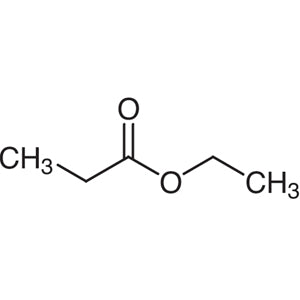
Ethyl Propionate is a chemical compound widely used in various laboratory experiments. As one of the key building blocks in organic chemistry, it plays a crucial role in the synthesis of complex compounds and the modification of molecular structures. This versatile compound is commonly utilized in esterification reactions and as an auxiliary material in the production of aromatic compounds. Its chemical stability and reactivity make it a valuable resource for chemists working in both research and educational settings.
Ethyl Propionate is favored for its simple molecular structure and moderate reactivity, which allow it to interact effectively with a wide range of reagents. Its relatively low boiling point facilitates processes such as evaporation and separation, making it ideal for use in laboratory procedures that require controlled thermal conditions. Additionally, its distinct aroma makes it easily identifiable, which is beneficial in both qualitative and quantitative analysis. These properties contribute to its widespread use in both academic and industrial laboratories.
In Indonesian laboratories, Ethyl Propionate is frequently employed in organic chemistry research, fragrance compound development, and the synthesis of specific compounds. It is an essential component in the curriculum of chemistry courses and is often used in practical sessions to teach fundamental chemical reactions and synthesis techniques. Its relevance extends to both educational institutions and research centers focused on pure and applied chemistry.
TCI brochures (PDF)
- Lipids 2025-12-17 · p. 9
- Ester Synthesis: Ethyl Propionate is ideal for esterification reactions due to its chemical stability and reactivity, enabling the production of ester compounds efficiently.
- Aromatic Compound Production: Its distinct aroma and molecular structure make it a useful auxiliary material in the synthesis of aromatic compounds.
- Molecular Structure Modification: The compound’s simple structure allows for easy modification, making it suitable for creating more complex organic molecules.
- Educational Demonstrations: Its reactivity and identifiable aroma make it a popular choice for teaching fundamental chemical reactions in academic settings.
- Distillation and Separation Processes: The low boiling point of Ethyl Propionate facilitates its use in distillation and separation techniques, enhancing laboratory efficiency.
| Brand | TCI |
|---|---|
| CAS number | 105-37-3 |
| Molecular formula | — |
| Purity | — |
| Category | Chemistry > Building Blocks > Non-Heterocyclic Building Blocks |
| Pack sizes | Available in various quantities as per supplier specifications |
| Physical form | Liquid |
| Storage | Store in a cool, dry place away from direct sunlight |
Ethyl Propionate should be stored in a cool, dry environment, away from direct sunlight and sources of heat. It is recommended to use airtight containers made of glass or stainless steel to prevent contamination and evaporation. Due to its flammable nature, it should be kept away from open flames and potential ignition sources. In laboratory settings, proper ventilation is essential to minimize exposure to vapors. Always handle the compound with appropriate personal protective equipment, including gloves and safety goggles, to ensure safe usage and storage.
—
Produk Terkait
-
tert-ButylPropionate TCI B3327
Regular price From Rp 2.094.750,00Regular price -
2-PhenylethylPropionate TCI P1823
Regular price Rp 689.850,00Regular price -
SodiumPropionate TCI P0512
Regular price From Rp 610.050,00Regular price -
PropylPropionate TCI P0511
Regular price From Rp 505.050,00Regular price -
PotassiumPropionate TCI P0510
Regular price From Rp 769.650,00Regular price -
PhenylPropionate TCI P0509
Regular price From Rp 1.749.300,00Regular price -
MethylPropionate TCI P0508
Regular price From Rp 505.050,00Regular price -
IsopropylPropionate TCI P0507
Regular price From Rp 689.850,00Regular price