2-Pentyne from TCI is a short-chain internal alkyne with a five-carbon backbone. Its carbon-carbon triple bond sits between the second and third carbon atoms, so a methyl group is on one side of the bond and an ethyl group is on the other. As a non-heterocyclic building block, 2-pentyne gives chemists a small alkyne unit. Through a range of established reactions, it can be converted into alkenes, ketones, aromatic rings or heterocycles. Organic synthesis and catalysis laboratories often use it as a model substrate for studying how unsymmetrical alkynes react.
Chemists mainly choose 2-pentyne because it is an unsymmetrical internal alkyne. The methyl and ethyl groups on either side of the triple bond are different sizes. This makes the compound a useful probe for regioselectivity in reactions such as hydration, hydroboration, carbometalation and metal-catalysed cyclisation. It has no acetylenic hydrogen, which sets it apart from terminal alkynes, so reactions that depend on a terminal C-H bond do not take place. Because the molecule is small, its reaction products are fairly simple and easy to analyse by spectroscopy and chromatography.
In Indonesia, 2-pentyne is useful to organic chemistry and catalysis research groups at universities, research institutes and industrial R&D laboratories. Postgraduate students and researchers use it to develop new catalytic methods, test selectivity hypotheses and build reaction-mechanism studies on a well-defined substrate. Synthesis laboratories also use it as an entry point for preparing more functionalised intermediates. Its predictable reactivity makes it practical for teaching laboratories and for method validation before work moves to more complex, costly substrates.
- Regioselectivity studies: the methyl and ethyl groups on either side of the triple bond differ in size, so researchers can measure how a catalyst or reagent tells the two alkyne carbons apart.
- Hydration and ketone synthesis: hydrating this internal alkyne gives ketone products, and the ratio of isomers shows clearly how selective the reaction conditions are.
- Hydroboration and carbometalation: the unsymmetrical internal triple bond is a good test of how organoboron and organometallic reagents add across alkynes with different substituents.
- Metal-catalysed cyclisation and annulation: as a small alkyne unit, 2-pentyne can be built into aromatic rings or heterocycles, which helps when developing new ring-forming catalytic methods.
- Mechanistic and analytical model work: its small size gives simple product mixtures that are easy to identify by spectroscopy and chromatography, which suits kinetic and mechanistic studies.
| Brand | TCI (product code P0628) |
|---|---|
| CAS number | 627-21-4 |
| Molecular formula | — |
| Purity | — |
| Category | Chemistry > Building Blocks > Non-Heterocyclic Building Blocks |
| Pack sizes | see the product listing for the TCI pack sizes currently offered |
| Physical form | — |
| Storage | keep tightly closed in a cool, well-ventilated place away from heat and ignition sources; follow the TCI label and SDS |
- Compound class: short-chain internal alkyne (C5), unsymmetrical, no acetylenic hydrogen
Store 2-pentyne in its original tightly sealed TCI container in a cool, dry, well-ventilated area, away from heat, sparks, open flames and other ignition sources. Like other low-molecular-weight hydrocarbons, it should be treated as volatile and flammable. Keep it away from strong oxidising agents and use a flammables cabinet where available. Handle it inside a fume hood while wearing safety glasses, chemical-resistant gloves and a lab coat. Avoid breathing in vapours and avoid contact with skin and eyes. Close containers straight after use to limit evaporation. Always check the product label and the TCI Safety Data Sheet for specific storage temperatures, hazard classifications and disposal requirements before use.
—
Produk Terkait
-
1-Pentyne TCI P0068
Regular price From Rp 769.650,00Regular price -
4-Methyl-2-pentyne TCI M0270
Regular price Rp 2.782.500,00Regular price -
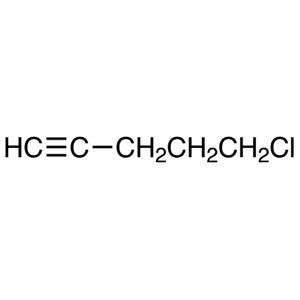
5-Chloro-1-pentyne TCI C1522
Regular price From Rp 1.273.650,00Regular price -
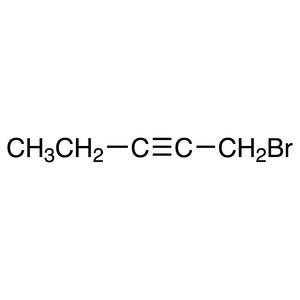
1-Bromo-2-pentyne TCI B6456
Regular price From Rp 3.605.700,00Regular price -
1,3,5-Triethynylbenzene TCI T2760
Regular price From Rp 3.578.400,00Regular price -
1-Butyl-4-ethynylbenzene TCI B2301
Regular price From Rp 980.700,00Regular price -
3,3-Dimethyl-1-butyne TCI B1114
Regular price From Rp 3.446.100,00Regular price -
2-Butyne TCI B0951
Regular price Rp 1.405.950,00Regular price