9-Phenylacridine is a chemical compound belonging to the heterocyclic category, characterized by its complex structure that includes an aromatic ring system and a phenyl group. It plays a vital role in laboratory settings, particularly in organic chemistry, where it serves as a key building block for the synthesis of various organic compounds. Its ability to interact with different functional groups makes it a versatile reagent in chemical reactions, supporting the development of new materials and pharmaceuticals. This compound is widely used in research environments due to its chemical stability and controlled reactivity, which are essential for maintaining the integrity of experimental processes.
One of the key properties that make 9-Phenylacridine a preferred choice is its non-volatile nature and resistance to degradation. These characteristics ensure that the compound remains stable during storage and use, reducing the risk of contamination or loss of potency. Additionally, its controlled reactivity allows chemists to manipulate it in a predictable manner, making it suitable for a wide range of synthetic applications. The compound’s stability also simplifies handling and storage, contributing to its reliability in both academic and industrial research settings.
In Indonesian laboratories, 9-Phenylacridine is commonly used in organic chemistry research, particularly in the synthesis of complex compounds. It is also employed in pharmacological studies and industrial chemical applications due to its ability to participate in reactions that yield compounds with specific biological activities. Its presence in these research areas underscores its importance as a fundamental reagent in the development of new chemical products and scientific discoveries.
Related TCI products
- TCI M1237 611-64-3 9-Methylacridine
- TCI M1775 36519-61-6 10-Methyl-9-phenylacridinium Perchlorate
- TCI D6218 1810004-87-5 3,6-Di-tert-butyl-9-mesityl-10-phenylacridinium Tetrafluoroborate
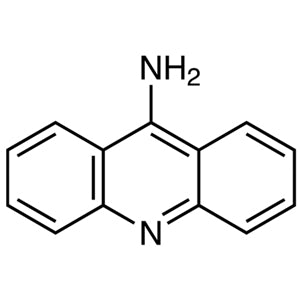
- TCI A2905 90-45-9 9-Aminoacridine
- TCI A1505 332927-03-4 9-Acridinecarboxylic Acid Hydrate
- TCI A0619 52417-22-8 9-Aminoacridine Hydrochloride Monohydrate
- Organic synthesis applications benefit from 9-Phenylacridine due to its ability to form stable intermediates and participate in diverse reaction pathways.
- Pharmaceutical research utilizes this compound for the development of bioactive molecules, as its structure can be modified to target specific biological functions.
- Industrial chemical processes incorporate 9-Phenylacridine for the production of specialized materials, leveraging its reactivity and stability in synthetic reactions.
- Analytical chemistry laboratories use this compound as a standard reference material for spectroscopic and chromatographic analyses.
- Environmental studies may employ 9-Phenylacridine to investigate the behavior of complex organic compounds in various chemical environments.
| Brand | TCI |
|---|---|
| CAS number | 602-56-2 |
| Molecular formula | — |
| Purity | — |
| Category | Chemistry > Building Blocks > Heterocyclic Building Blocks |
| Pack sizes | Available in various quantities as per supplier specifications |
| Physical form | Solid |
| Storage | Store in a cool, dry place away from direct sunlight and moisture |
9-Phenylacridine should be stored in a cool, dry environment to maintain its chemical stability and prevent degradation. It is recommended to keep the compound in a tightly sealed container to minimize exposure to air and moisture. Due to its non-volatile nature, it does not require refrigeration but should be protected from extreme temperature fluctuations. In laboratory settings, it is important to handle the compound with care, using appropriate personal protective equipment such as gloves and safety goggles. Regular inspection of storage conditions ensures the compound remains in optimal condition for use in research applications. Proper labeling of containers is also essential to ensure safe handling and prevent accidental misuse.
—
Produk Terkait
-
9-Methylacridine TCI M1237
Regular price From Rp 2.094.750,00Regular price -
10-Methyl-9-phenylacridiniumPerchlorate TCI M1775
Regular price From Rp 2.704.800,00Regular price -
3,6-Di-tert-butyl-9-mesityl-10-phenylacridiniumTetrafluoroborate TCI D6218
Regular price Rp 4.771.200,00Regular price -
9-Aminoacridine TCI A2905
Regular price From Rp 1.510.950,00Regular price -
9-AcridinecarboxylicAcidHydrate TCI A1505
Regular price Rp 1.298.850,00Regular price -
9-AminoacridineHydrochlorideMonohydrate TCI A0619
Regular price From Rp 875.700,00Regular price -
9-Oxoacridine-10-aceticAcid TCI O0432
Regular price From Rp 769.650,00Regular price -
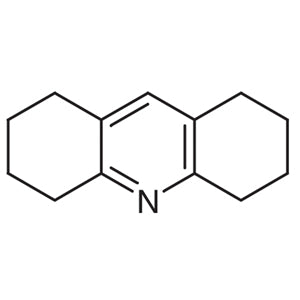
1,2,3,4,5,6,7,8-Octahydroacridine TCI O0197
Regular price Rp 6.095.250,00Regular price