

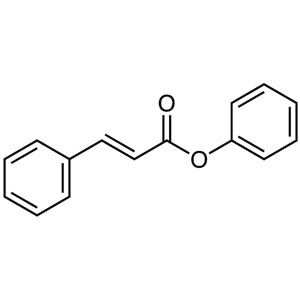
Phenyl (E)-Cinnamate is a chemical compound widely used in laboratory settings for the synthesis of complex molecules. As a building block in organic chemistry, it serves as a versatile intermediate in various synthetic pathways. Its aromatic structure and cinnamoyl chain make it a valuable component in reactions involving electrophilic substitution and conjugated systems. This compound is commonly found in chemical laboratories as a foundational material for research and development. Its role extends to acting as an electron donor or a binding agent in specific reaction mechanisms, making it essential for advanced chemical processes.
The compound's stability and ability to interact with multiple functional groups make it a preferred choice for organic chemists. Its non-polar nature and high melting point facilitate ease of handling during purification and evaporation processes. These physical properties contribute to its reliability in both dry and solvent-based reactions. Additionally, its chemical stability ensures consistent performance across different experimental conditions, enhancing its utility in laboratory environments. The combination of structural simplicity and functional versatility makes it a go-to material for researchers aiming to explore new chemical transformations.
In Indonesian laboratories, Phenyl (E)-Cinnamate is extensively used in organic chemistry research, particularly in the synthesis of aromatic compounds and antioxidants. It is a key reagent in academic and industrial settings, supporting both basic and applied research. Many research institutions and universities rely on this compound for experiments that require precise chemical intermediates. Its widespread application underscores its importance in the chemical research landscape of Indonesia.
Related TCI products
- Organic synthesis of aromatic compounds due to its aromatic structure and reactivity.
- Production of antioxidants through conjugated systems and functional group interactions.
- Electrophilic substitution reactions as a stable electron donor in synthetic pathways.
- Conjugated system studies for understanding molecular behavior in chemical reactions.
- Intermediate in the development of new chemical compounds for pharmaceutical and industrial applications.
| Brand | TCI |
|---|---|
| CAS number | 25695-77-6 |
| Molecular formula | — |
| Purity | — |
| Category | Chemistry > Building Blocks > Non-Heterocyclic Building Blocks |
| Pack sizes | Available in standard laboratory quantities |
| Physical form | Solid crystalline powder |
| Storage | Store in a cool, dry place away from light and moisture |
Phenyl (E)-Cinnamate should be stored in a cool, dry environment to maintain its chemical stability. It is recommended to keep the compound in airtight containers to prevent exposure to moisture and air, which could affect its integrity. Due to its non-polar nature, it should be stored in containers that are resistant to chemical interactions. In laboratory settings, it is important to handle the compound with appropriate personal protective equipment to ensure safety. Regular monitoring of storage conditions will help maintain the compound's quality and usability for research purposes.
—
Produk Terkait
-
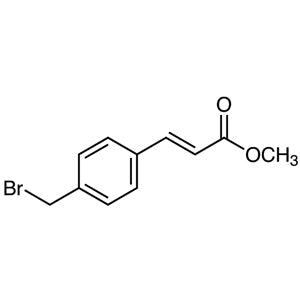
Methyl(E)-4-(Bromomethyl)cinnamate TCI M2816
Regular price Rp 6.070.050,00Regular price -
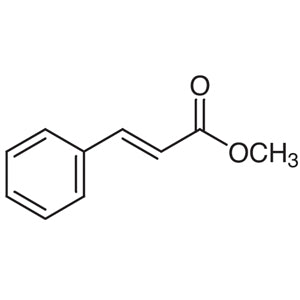
MethylCinnamate TCI C0360
Regular price Rp 530.250,00Regular price -
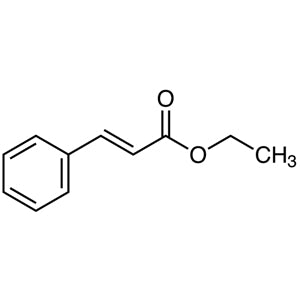
Ethyl(E)-Cinnamate TCI C0359
Regular price From Rp 3.155.250,00Regular price -
BenzylCinnamate TCI C0358
Regular price From Rp 769.650,00Regular price -
Butyl4-[(4-Methoxybenzylidene)amino]cinnamate TCI B0255
Regular price Rp 5.460.000,00Regular price -
2-Phenylethyl(E)-Cinnamate TCI P2007
Regular price From Rp 795.900,00Regular price -
Ethyl4-[(4-Methoxybenzylidene)amino]cinnamate TCI M0602
Regular price Rp 8.692.950,00Regular price -
IsopropylCinnamate TCI C1779
Regular price Rp 477.750,00Regular price
![16833-17-3 Butyl 4-[(4-Methoxybenzylidene)amino]cinnamate - AMI Scientific](http://amiscientific.com/cdn/shop/files/TCI2510B0255.jpg?v=1768359023&width=533)
![16833-17-3 Butyl 4-[(4-Methoxybenzylidene)amino]cinnamate - AMI Scientific](http://amiscientific.com/cdn/shop/files/TCI2510B0255_69fdb2a3-eb77-4951-8356-ada2825b3f53.jpg?v=1772176989&width=533)

![6421-30-3 Ethyl 4-[(4-Methoxybenzylidene)amino]cinnamate - AMI Scientific](http://amiscientific.com/cdn/shop/files/TCI2510M0602.jpg?v=1768361341&width=533)
