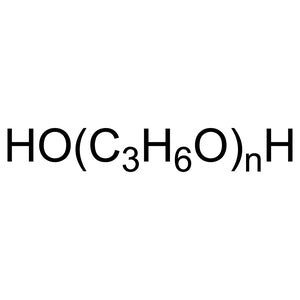
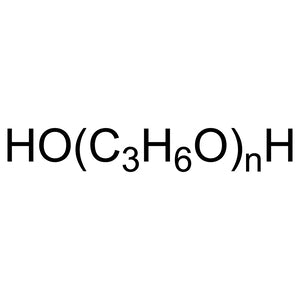
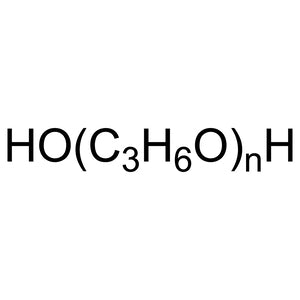
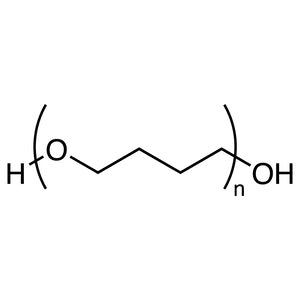
Poly(propylene glycol) 200 is a polyether built from repeating propylene oxide units, with a hydroxyl group at each end of the chain. The number 200 is its nominal average molecular weight, which makes it one of the lightest grades in TCI's PPG series. In the laboratory, PPG 200 is used as a macrodiol for making polymers such as polyurethanes and polyesters. It also works as a solvent, a plasticizer, or a reference material when researchers study how chain length affects polymer properties.
Because its chains are short, PPG 200 is a liquid with fairly low viscosity and a high hydroxyl content per unit mass. This makes it an effective chain extender or hard-segment component in polyurethanes. The resulting materials tend to be stiffer than those made with higher molecular weight PPG grades. Short-chain PPG also mixes more readily with water and polar solvents, so it fits a wide range of formulations. Its low viscosity means it is easy to measure, transfer, and blend at the bench. Its well-defined position at the low end of the PPG series makes comparisons between grades easy to interpret.
In Indonesia, PPG 200 is useful to polymer chemistry and chemical engineering laboratories. It also serves product development teams working on coatings, adhesives, and polyurethane foams. Students and researchers can use it to study how polyol chain length affects the mechanical and thermal behavior of the polymers they make. University research groups, industrial R&D centers, and quality control laboratories can rely on it as a consistent, well-characterized starting material for both teaching experiments and applied formulation work.
TCI brochures (PDF)
- Monomers 2025-05-28 · p. 26
Related TCI products
- Polyurethane synthesis: PPG 200 acts as a short-chain diol that reacts with isocyanates, and its high hydroxyl content lets it build hard segments for stiffer polyurethane materials.
- Polyester preparation: The two terminal hydroxyl groups let PPG 200 react with diacids or their derivatives, so researchers can build polyether-polyester structures with controlled flexibility.
- Chain-length comparison studies: As one of the lightest grades in the PPG series, it gives a clear low-molecular-weight reference point for comparing physical and mechanical properties against heavier polyols.
- Plasticizer and solvent use: Its low viscosity and good miscibility with water and polar solvents make it practical as a plasticizing additive or reaction medium in experimental formulations.
- Coatings, adhesives, and foam development: Formulation laboratories can use PPG 200 to adjust crosslink density and rigidity in prototype coatings, adhesives, and polyurethane foam systems.
| Brand | TCI (product code P3273) |
|---|---|
| CAS number | 25322-69-4 |
| Molecular formula | — |
| Purity | — |
| Category | Materials Science > Polymer/Macromolecule Reagents > Monomers |
| Pack sizes | See the product listing for available TCI pack sizes |
| Physical form | Relatively low-viscosity liquid |
| Storage | Keep tightly closed in a cool, dry, well-ventilated place; follow the TCI label and SDS |
Store Poly(propylene glycol) 200 in its original tightly sealed container, in a cool, dry, well-ventilated area away from direct sunlight, heat sources, and strong oxidizing agents. Because it is a hydroxyl-terminated polyol, keep containers closed when not in use to limit moisture uptake, which can interfere with isocyanate-based reactions. Use clean glass or chemically compatible containers when transferring it. Wear standard laboratory protective equipment, including safety glasses, gloves, and a lab coat, and avoid contact with skin and eyes. Handle it in a well-ventilated area or fume hood, wipe up spills promptly, and always check the supplier's Safety Data Sheet for complete hazard and disposal information.
—
Produk Terkait
-
Poly(propyleneglycol)4000 TCI P3279
Regular price From Rp 557.550,00Regular priceRp 405.300,00Sale price From Rp 557.550,00 -
Poly(propyleneglycol)3000 TCI P3278
Regular price From Rp 557.550,00Regular priceRp 405.300,00Sale price From Rp 557.550,00 -
Poly(propyleneglycol)2000 TCI P3277
Regular price From Rp 557.550,00Regular priceRp 405.300,00Sale price From Rp 557.550,00 -
Poly(propyleneglycol)1000 TCI P3276
Regular price From Rp 557.550,00Regular priceRp 405.300,00Sale price From Rp 557.550,00 -
Poly(propyleneglycol)600 TCI P3275
Regular price From Rp 557.550,00Regular priceRp 405.300,00Sale price From Rp 557.550,00 -
Poly(propyleneglycol)400 TCI P3274
Regular price From Rp 557.550,00Regular priceRp 405.300,00Sale price From Rp 557.550,00 -
Poly(tetramethyleneether)Glycol2900 TCI P3031
Regular price From Rp 717.150,00Regular priceRp 500.850,00Sale price From Rp 717.150,00 -
Poly(tetramethyleneether)Glycol2000 TCI P3028
Regular price From Rp 717.150,00Regular priceRp 500.850,00Sale price From Rp 717.150,00