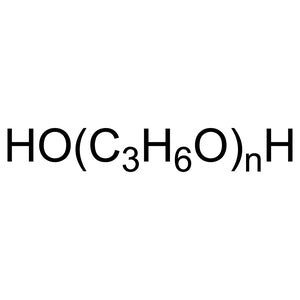
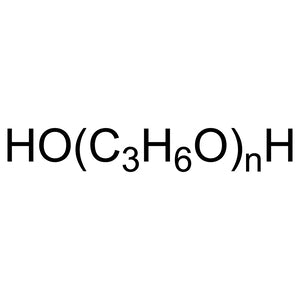
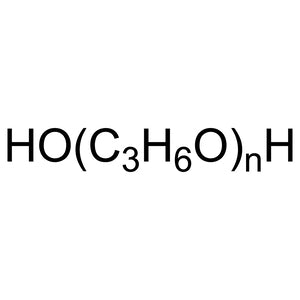
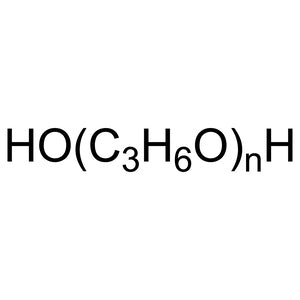
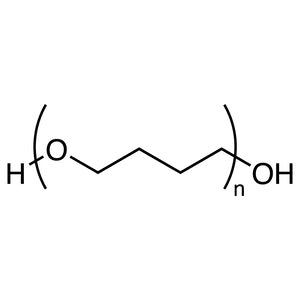
Poly(propylene glycol) 400 is a linear polyether built from propylene oxide units. It has a hydroxyl group at each end of the chain and a nominal average molecular weight of 400. In TCI's PPG series, this grade has a short-to-medium chain length. It sits between the very light PPG 200 and the long-chain PPG grades. In the laboratory, PPG 400 is mainly used as a polyol for polymer synthesis and as a base material in formulations. It also serves as a medium or additive in many materials chemistry experiments.
Researchers choose PPG 400 because its properties are well balanced. The chain is long enough to give a polymer some flexibility. At the same time, its hydroxyl content is still high enough to build strong networks when it reacts with isocyanates or other crosslinking agents. It is a liquid that pours fairly easily. It generally mixes with water and with many organic solvents, so it works in both water-based and solvent-based formulations. This makes it easy to add to many different experimental setups without extra preparation.
In Indonesian laboratories, PPG 400 is useful for research on polyurethane coatings, adhesives, elastomers and foams. University and industrial research groups also use it to study polymer electrolytes. Product development laboratories use it to build personal care formulations. Because it is part of TCI's wider PPG range, researchers can compare it directly with shorter and longer chain grades. This helps them see how chain length affects flexibility, crosslink density and compatibility in their own formulations.
TCI brochures (PDF)
- Monomers 2025-05-28 · p. 26
Related TCI products
- Polyurethane synthesis: PPG 400 serves as the polyol component when reacting with isocyanates. Its two terminal hydroxyl groups and moderate chain length give networks that combine strength with some flexibility.
- Coatings and adhesives research: Its balance between chain length and hydroxyl content lets researchers tune hardness and flexibility. This makes it a practical starting polyol for experimental coating and adhesive formulations.
- Elastomer and foam development: As a short-to-medium chain polyether polyol, it helps researchers study how chain length affects elasticity, crosslink density and the final mechanical behaviour of polyurethane elastomers and foams.
- Polymer electrolyte studies: Its polyether backbone and liquid form make PPG 400 suitable for research on polymer electrolytes. Researchers use it to study how chain structure and flexibility influence the performance of the electrolyte material.
- Formulation and personal care development: It generally mixes with water and many organic solvents. This lets development laboratories use it as a base material, medium or additive in water-based and solvent-based experimental formulations.
| Brand | TCI (product code P3274) |
|---|---|
| CAS number | 25322-69-4 |
| Molecular formula | — |
| Purity | — |
| Category | Materials Science > Polymer/Macromolecule Reagents > Monomers |
| Pack sizes | Please refer to the product listing for available pack sizes |
| Physical form | Liquid; nominal average molecular weight of 400 |
| Storage | Keep in a tightly closed container in a cool, dry and well-ventilated place |
Store Poly(propylene glycol) 400 in its original, tightly sealed container. Keep it in a cool, dry and well-ventilated area, away from direct sunlight, heat sources and strong oxidising agents. Close containers promptly after use so the material does not absorb moisture, which can affect reactions with isocyanates. Glass or chemically compatible plastic containers are suitable for working portions. Follow standard laboratory practice when handling it: wear safety glasses, gloves and a lab coat, avoid contact with skin and eyes, and clean up spills promptly. Always read the supplier's Safety Data Sheet before use.
—
Produk Terkait
-
Poly(propyleneglycol)4000 TCI P3279
Regular price From Rp 557.550,00Regular priceRp 405.300,00Sale price From Rp 557.550,00 -
Poly(propyleneglycol)3000 TCI P3278
Regular price From Rp 557.550,00Regular priceRp 405.300,00Sale price From Rp 557.550,00 -
Poly(propyleneglycol)2000 TCI P3277
Regular price From Rp 557.550,00Regular priceRp 405.300,00Sale price From Rp 557.550,00 -
Poly(propyleneglycol)1000 TCI P3276
Regular price From Rp 557.550,00Regular priceRp 405.300,00Sale price From Rp 557.550,00 -
Poly(propyleneglycol)600 TCI P3275
Regular price From Rp 557.550,00Regular priceRp 405.300,00Sale price From Rp 557.550,00 -
Poly(propyleneglycol)200 TCI P3273
Regular price From Rp 557.550,00Regular priceRp 405.300,00Sale price From Rp 557.550,00 -
Poly(tetramethyleneether)Glycol2900 TCI P3031
Regular price From Rp 717.150,00Regular priceRp 500.850,00Sale price From Rp 717.150,00 -
Poly(tetramethyleneether)Glycol2000 TCI P3028
Regular price From Rp 717.150,00Regular priceRp 500.850,00Sale price From Rp 717.150,00