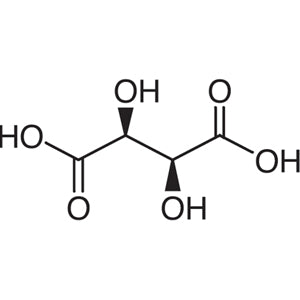
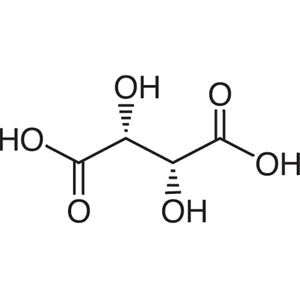
DL-Tartaric Acid is a chemical compound widely used in various laboratory experiments and industrial applications. As a fundamental building block in chemistry, it plays a crucial role in the synthesis of complex compounds, especially in reactions requiring specific reactivity and stability. This compound is essential for both qualitative and quantitative analysis, as well as in the production of chemicals that demand clarity and chemical stability. Its unique molecular structure, featuring two carboxyl groups, allows it to interact with metal ions or other ions, making it highly versatile in a range of chemical processes.
DL-Tartaric Acid is preferred due to its solubility in water, which simplifies dissolution and usage in diverse laboratory conditions. Its ability to participate in precipitation, complexation, and redox reactions makes it a valuable reagent in synthetic and analytical chemistry. Additionally, its chemical stability and predictable behavior under various conditions contribute to its reliability in experimental setups. These properties make it an indispensable material for both research and educational purposes.
In Indonesian laboratories, DL-Tartaric Acid is commonly used in pure chemical research, chemical analysis, and the development of chemical products. It is also a key component in laboratory education, where it is used to introduce students to organic and inorganic chemistry concepts. Its availability and consistent performance make it a preferred choice for both academic and industrial applications.
TCI brochures (PDF)
- Metal Extractants for Lithium Ion Battery Recycling 2024-01-16 · p. 1
Related TCI products
- Pure Chemical Research: DL-Tartaric Acid is used to synthesize complex organic compounds due to its reactivity and stability.
- Qualitative and Quantitative Analysis: Its solubility and chemical properties make it ideal for analytical procedures requiring precise measurements.
- Redox Reactions: The compound's ability to participate in oxidation-reduction processes makes it suitable for electrochemical studies.
- Complexation Reactions: Its carboxyl groups enable interaction with metal ions, making it useful in coordination chemistry experiments.
- Educational Purposes: It is widely used in teaching to demonstrate fundamental chemical reactions and properties in both organic and inorganic chemistry.
| Brand | TCI |
|---|---|
| CAS number | 133-37-9 |
| Molecular formula | — |
| Purity | — |
| Category | Chemistry > Building Blocks > Non-Heterocyclic Building Blocks |
| Pack sizes | Available in various quantities to meet different laboratory needs |
| Physical form | White crystalline solid |
| Storage | Store in a cool, dry place away from moisture and direct sunlight |
DL-Tartaric Acid should be stored in a cool, dry place, away from moisture and direct sunlight to maintain its chemical integrity. It is recommended to use airtight containers to prevent exposure to humidity, which can affect its purity and performance. As a solid, it is typically handled in a well-ventilated area to ensure safe laboratory practices. While it is not classified as a hazardous substance, standard laboratory precautions should be followed, such as wearing appropriate personal protective equipment when handling or transferring the compound. Proper storage and handling help preserve its properties and ensure consistent results in experiments.
—
Produk Terkait
-
D-(-)-TartaricAcid TCI T0026
Regular price From Rp 980.700,00Regular priceRp 701.400,00Sale price From Rp 980.700,00 -
L-(+)-TartaricAcid TCI T0025
Regular price From Rp 530.250,00Regular priceRp 386.400,00Sale price From Rp 530.250,00 -
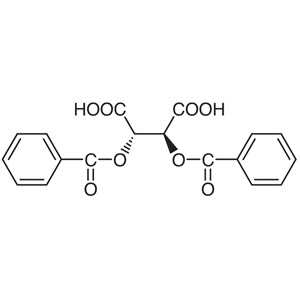
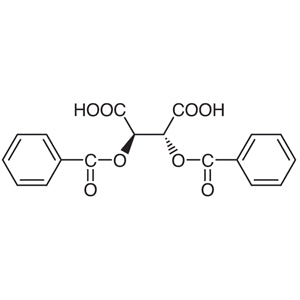
(+)-Dibenzoyl-D-tartaricAcid TCI D3826
Regular price From Rp 903.000,00Regular priceRp 631.050,00Sale price From Rp 903.000,00 -
(-)-Dibenzoyl-L-tartaricAcid TCI D3492
Regular price From Rp 1.087.800,00Regular priceRp 775.950,00Sale price From Rp 1.087.800,00 -
(-)-Di-p-anisoyl-L-tartaricAcid TCI D3491
Regular price Rp 2.942.100,00Regular priceRp 2.072.700,00Sale price Rp 2.942.100,00 -
(+)-Di-p-anisoyl-D-tartaricAcid TCI D3490
Regular price From Rp 769.650,00Regular priceRp 537.600,00Sale price From Rp 769.650,00 -
(+)-Dipivaloyl-D-tartaricAcid TCI D2702
Regular price From Rp 848.400,00Regular priceRp 609.000,00Sale price From Rp 848.400,00 -
(-)-Dipivaloyl-L-tartaricAcid TCI D2686
Regular price From Rp 1.618.050,00Regular priceRp 1.146.600,00Sale price From Rp 1.618.050,00