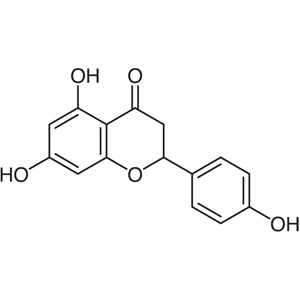
Naringenin is a flavonoid compound naturally found in various plants such as citrus fruits, garlic, and certain medicinal plants. As a member of the phenylpropanoid family, it plays a significant role in biochemical research due to its diverse biological activities, including antioxidant, anti-inflammatory, and antitumor properties. In the laboratory, naringenin is used as a key reagent for studying pharmacological effects, toxicological responses, and plant metabolite pathways. Its presence in natural sources makes it an essential component for researchers exploring the bioactive properties of plant-derived compounds.
Naringenin is preferred for its stable chemical structure and solubility in organic solvents, which simplifies its isolation and processing in laboratory settings. Its ability to interact with various receptors and enzymes in the body makes it a valuable tool in pharmacological and biochemical studies. The compound's high purity and consistent quality ensure reliable results in experiments requiring accuracy and precision. These characteristics make naringenin a sought-after reagent in both academic and industrial research environments.
In Indonesian laboratories, naringenin is commonly used in research related to natural product chemistry, drug development, and nutritional science. Its role in modulating metabolic pathways in the human body has led to its application in studies focused on health and disease. Researchers in Indonesia rely on naringenin to explore its potential therapeutic applications and to support the development of new pharmaceutical and nutraceutical products.
- Naringenin is used in pharmacological studies to investigate its anti-inflammatory and antioxidant effects on cellular systems.
- It is applied in toxicological research to assess its safety profile and potential side effects in biological models.
- Naringenin supports plant metabolite studies by enabling the analysis of its biosynthetic pathways and interactions with plant enzymes.
- It is utilized in drug development to evaluate its ability to modulate metabolic pathways and enhance bioavailability of other compounds.
- The compound is employed in nutritional science to study its impact on human metabolism and its potential role in dietary supplements.
| Brand | TCI |
|---|---|
| CAS number | 67604-48-2 |
| Molecular formula | — |
| Purity | — |
| Category | Life Science > Biochemicals and Reagents > Phenylpropanoids, Aromatic Polyketides |
| Pack sizes | Available in various quantities as per supplier specifications |
| Physical form | Solid powder |
| Storage | Store in a cool, dry place away from light and moisture |
Naringenin should be stored in a cool, dry environment to maintain its chemical stability and prevent degradation. It is recommended to keep it in a tightly sealed container to avoid exposure to moisture and air. Due to its solubility in organic solvents, it should be handled in a well-ventilated area to minimize inhalation risks. Laboratory personnel should wear appropriate personal protective equipment, such as gloves and safety goggles, when handling the compound. Naringenin is non-hazardous under normal conditions but should be stored away from incompatible materials to ensure safety. Proper labeling and storage conditions are essential to maintain its integrity and ensure safe usage in research settings.
—
Produk Terkait
-
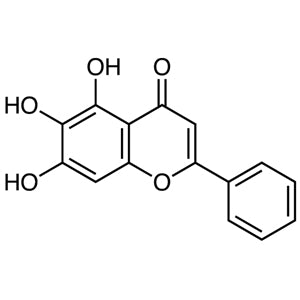
Baicalein TCI T2721
Regular price From Rp 3.100.650,00Regular price -
Hesperidin TCI H0049
Regular price From Rp 1.220.100,00Regular price -
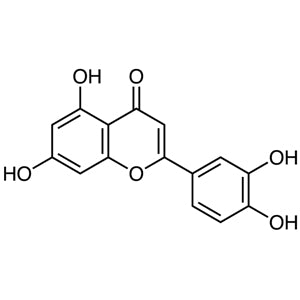
3',4',5,7-Tetrahydroxyflavone TCI T2682
Regular price From Rp 1.565.550,00Regular price -
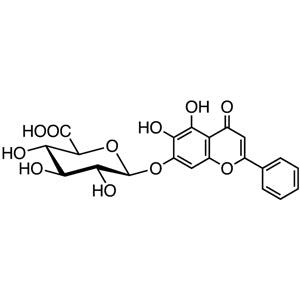
Baicalin TCI B2835
Regular price Rp 2.677.500,00Regular price -
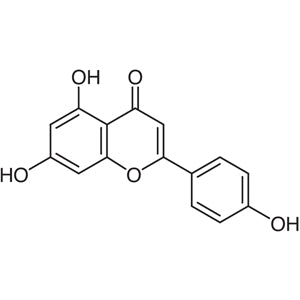
Apigenin TCI A1514
Regular price Rp 5.778.150,00Regular price -
Fisetin TCI T0121
Regular price From Rp 848.400,00Regular price -
RutinHydrate TCI R0035
Regular price Rp 1.378.650,00Regular price -
QuercetinHydrate TCI P0042
Regular price Rp 1.326.150,00Regular price