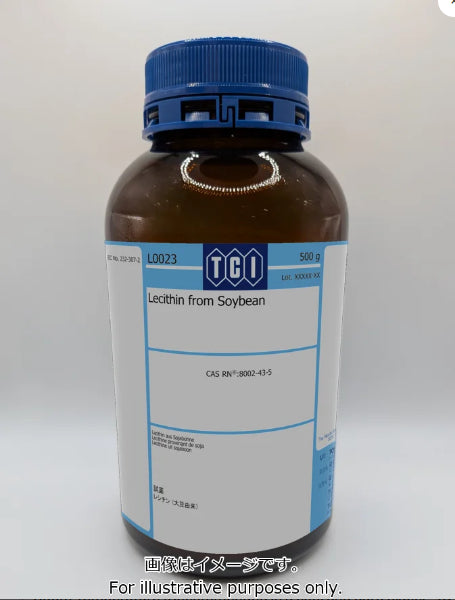
Lecithin from Soybean is a mixture of plant-derived phospholipids obtained from soybeans, and it stands as one of the most widely used materials in lipid research, emulsion science, and delivery system development. Its principal components include phosphatidylcholine together with phosphatidylethanolamine and other phospholipids characteristic of plant sources. In the laboratory, this material is used to form liposomes, to stabilize emulsions, and to provide a lipid matrix in studies of molecular interactions with membranes. Its broad availability and plant origin make soybean lecithin a practical choice for both food and pharmaceutical research.
The most prominent property of soybean lecithin is its ability to act as an effective natural emulsifier in both oil-in-water and water-in-oil systems. Its amphiphilic structure allows the molecules to occupy the interface and reduce surface tension, so that the dispersions formed are more stable against droplet coalescence. Its fatty acid profile, rich in unsaturated chains, gives the bilayer good flexibility at room temperature. As a plant-derived material, soybean lecithin is also the preferred option when research requires a substance free from animal sources. TCI reagent quality supports consistent performance across repeated preparations.
In Indonesian laboratories, soybean lecithin is commonly found in food technology departments, pharmaceutical formulation groups, and biochemistry research units working on membrane models. It is typically used during the preparation of liposome suspensions, in trial formulations of emulsions and creams, and in teaching exercises that demonstrate the behaviour of amphiphilic molecules. Because it is plant-derived and widely accepted, it also fits work in institutions where animal-origin materials are avoided for regulatory or cultural reasons.
TCI brochures (PDF)
- Phospholipids 2024-02-20 · p. 1
- Drug Delivery System (DDS) Research Reagents 2025-01-29 · p. 1
- Lipids 2025-12-17 · p. 17
- Reagents for Biological Research 2025-03-11 · p. 63
Related TCI products
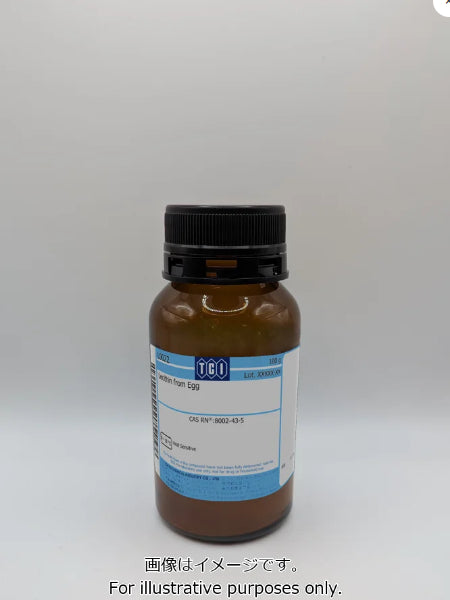
- TCI L0022 8002-43-5 Lecithin from Egg
- TCI A0781 506-32-1 Arachidonic Acid
- TCI D4250 4235-95-4 1,2-Dioleoyl-sn-glycero-3-phosphocholine
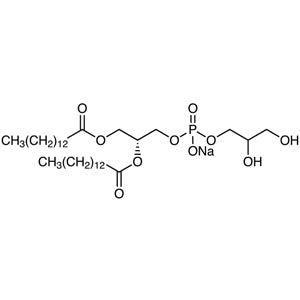
- TCI D3946 200880-40-6 1,2-Dimyristoyl-sn-glycero-3-phospho-rac-(1-glycerol) Sodium Salt
- TCI D3926 816-94-4 1,2-Distearoyl-sn-glycero-3-phosphocholine
- TCI D3925 63-89-8 1,2-Dipalmitoyl-sn-glycero-3-phosphocholine
- Liposome preparation — the phospholipid mixture self-assembles into bilayer vesicles in aqueous media, providing a straightforward and reproducible starting material for vesicle formation studies and encapsulation trials.
- Emulsion stabilization — its amphiphilic structure positions the molecules at the oil–water interface and lowers surface tension, keeping dispersed droplets separated and resisting coalescence over the working period.
- Membrane model systems — the plant phospholipid composition offers a realistic lipid matrix for investigating how small molecules, peptides, and proteins interact with and partition into biological membranes.
- Pharmaceutical formulation research — as a natural emulsifier of reagent quality, it supports trial formulations of creams, dispersions, and lipid-based delivery systems during early development work.
- Food technology studies — being derived from soybean rather than animal tissue, it suits emulsification research in food systems where a plant-origin ingredient is required by the study design.
| Brand | TCI (Tokyo Chemical Industry) |
|---|---|
| CAS number | 8002-43-5 |
| Molecular formula | — |
| Purity | — |
| Category | Life Science > Biochemicals and Reagents > Lipids |
| Pack sizes | Available in standard TCI research packaging; please confirm the currently offered size when ordering |
| Physical form | — |
| Storage | Keep cool and protected from light in the original closed container |
- Product Code: L0023
- Source: Plant-derived, obtained from soybean; a mixture of phospholipids including phosphatidylcholine and phosphatidylethanolamine
Store the container in a cool, dry place away from direct light and heat sources, keeping it tightly closed when not in use to limit exposure to air and moisture, since the unsaturated fatty acid chains are susceptible to oxidation over time. Use clean, dry glass or chemically compatible containers for weighing and transfer, and avoid introducing water into the stock material. Allow refrigerated material to reach room temperature before opening to prevent condensation inside the container. Handle in a well-ventilated area, wear gloves, safety glasses, and a laboratory coat, and follow the manufacturer's safety data sheet together with your institution's standard laboratory practices for disposal of residues.
—
Produk Terkait
-
LecithinfromEgg TCI L0022
Regular price From Rp 1.670.550,00Regular priceRp 1.183.350,00Sale price From Rp 1.670.550,00 -
ArachidonicAcid TCI A0781
Regular price From Rp 2.384.550,00Regular priceRp 1.683.150,00Sale price From Rp 2.384.550,00 -
1,2-Dioleoyl-sn-glycero-3-phosphocholine TCI D4250
Regular price From Rp 2.384.550,00Regular priceRp 1.683.150,00Sale price From Rp 2.384.550,00 -
1,2-Dimyristoyl-sn-glycero-3-phospho-rac-(1-glycerol)SodiumSalt TCI D3946
Regular price Rp 9.009.000,00Regular priceRp 6.315.750,00Sale price Rp 9.009.000,00 -
1,2-Distearoyl-sn-glycero-3-phosphocholine TCI D3926
Regular price From Rp 2.757.300,00Regular priceRp 1.943.550,00Sale price From Rp 2.757.300,00 -
1,2-Dipalmitoyl-sn-glycero-3-phosphocholine TCI D3925
Regular price From Rp 2.252.250,00Regular priceRp 1.590.750,00Sale price From Rp 2.252.250,00 -
1,2-Dimyristoyl-sn-glycero-3-phosphocholine TCI D3924
Regular price From Rp 2.702.700,00Regular priceRp 1.905.750,00Sale price From Rp 2.702.700,00 -
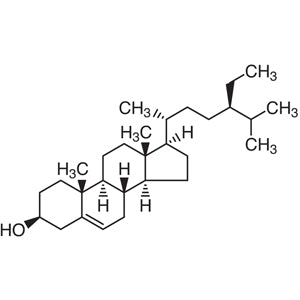
beta-Sitosterol(containsCampesterol) TCI S0040
Regular price Rp 1.563.450,00Regular priceRp 1.108.800,00Sale price Rp 1.563.450,00